Many farmers in Kenya are always looking for fruit trees that can do more than produce a harvest. A tree that provides food, improves soil fertility, offers shade and creates additional income opportunities is a valuable addition to any farm. The ice cream bean tree is one of those rare crops that can serve several purposes at the same time.
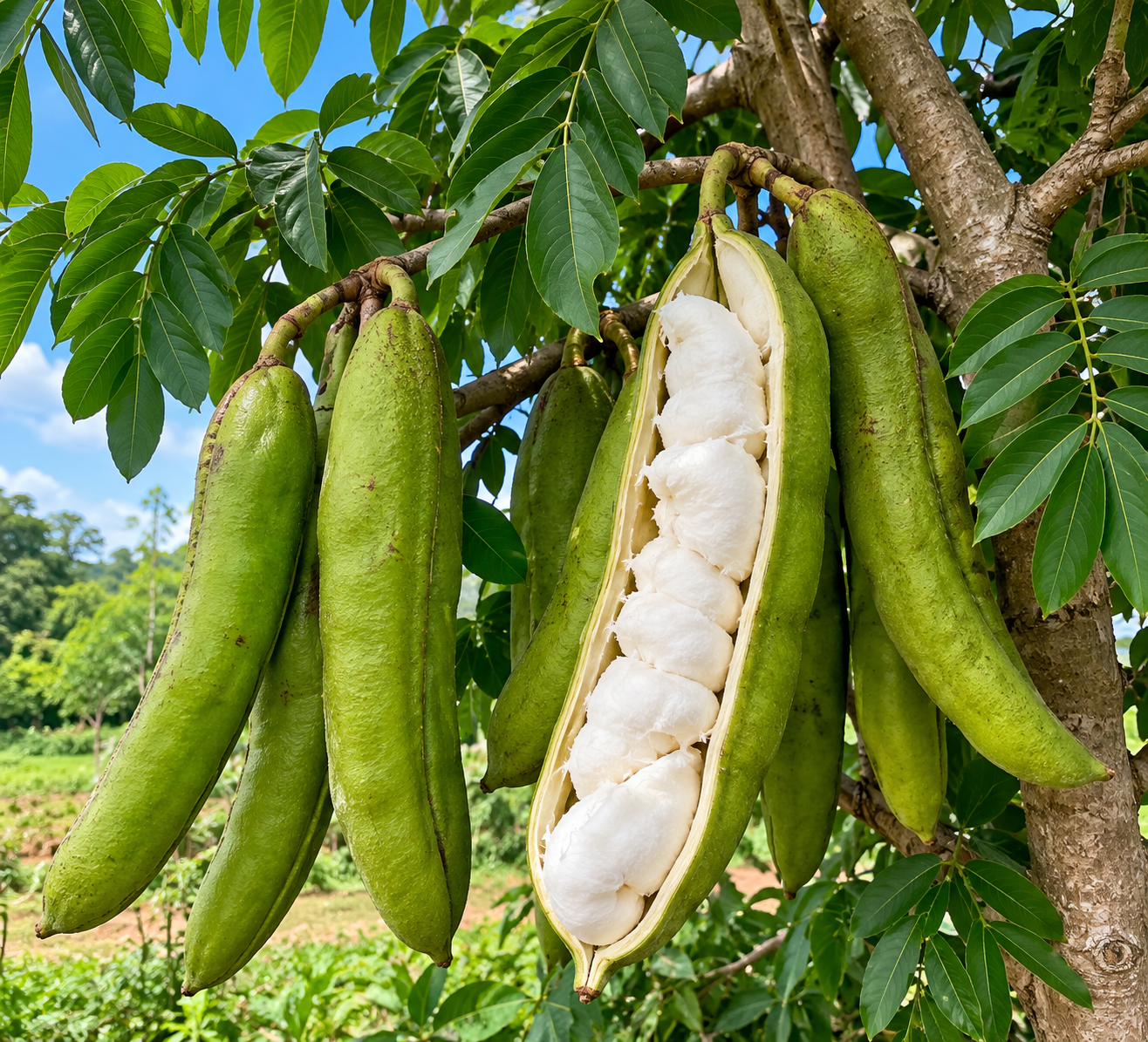
Ice cream bean farming is still relatively uncommon in Kenya, which means many consumers have never tasted the fruit. Once opened, the long green pods reveal a soft white pulp that surrounds the seeds. The pulp has a naturally sweet flavour that reminds many people of vanilla ice cream or cotton candy, which is how the tree earned its popular name. Because of its unique taste and attractive appearance, the fruit has strong potential for specialty fruit markets, agro tourism farms and direct sales to consumers.
What Is an Ice Cream Bean Tree?
The ice cream bean tree belongs to the Inga genus and is native to tropical regions of Central and South America. It is a fast growing tree that produces long pods, sometimes reaching 30 to 60 centimetres in length depending on the variety and growing conditions. Inside each pod is a fluffy white pulp that is sweet, aromatic and enjoyable when eaten fresh.
The seeds themselves are usually not eaten raw, but the surrounding pulp is the edible portion that makes the fruit popular. In many tropical countries, children and adults eat it directly from the pod, and it is also used in desserts, fruit salads and fresh fruit platters.
Apart from its fruit, the tree is highly valued for its ability to fix nitrogen in the soil, making it useful in agroforestry systems and mixed farming.
Can Ice Cream Bean Trees Grow in Kenya?
Ice cream bean trees can grow well in many parts of Kenya that have warm temperatures and moderate to high rainfall. They are particularly suitable for tropical and subtropical regions where temperatures remain relatively stable throughout the year.
Areas in Central Kenya, parts of Eastern Kenya, the Coast region, Western Kenya and other locations with fertile soils and reliable moisture can support healthy growth. The tree prefers temperatures between 18°C and 30°C and performs best where it receives full sunlight for most of the day.
One advantage of the ice cream bean tree is its adaptability. Once established, it can tolerate short dry periods better than many tropical fruit crops, although regular moisture greatly improves flowering and pod production.
The Best Soil for Ice Cream Bean Farming
The tree grows best in deep, well drained soils that contain plenty of organic matter. Loamy and sandy loam soils are excellent because they provide both good drainage and adequate moisture retention.
Although ice cream bean trees are relatively adaptable, they do not perform well in permanently waterlogged areas. Poor drainage can affect root development and increase the risk of disease. A soil pH of about 5.5 to 7.0 is generally suitable for healthy growth.
Before planting a commercial orchard, it is advisable to conduct a soil test. This helps determine nutrient levels and soil pH, allowing the farmer to make the necessary adjustments before the trees are established.
Planting Ice Cream Bean Seedlings
Successful ice cream bean farming begins with healthy seedlings. Farmers should obtain vigorous seedlings from a reputable nursery to ensure they are planting the correct variety.
Planting holes should be prepared in advance and mixed with well decomposed manure or compost. The seedling should be planted at the same depth it was growing in the nursery and watered thoroughly immediately after planting.
Mulching around the young tree helps conserve moisture, reduce weed growth and improve soil structure over time. Keep the mulch a short distance away from the trunk to prevent moisture related problems.
Because the tree grows quickly, young seedlings should be protected from grazing animals and physical damage during the establishment period.
Spacing for a Productive Orchard
Ice cream bean trees develop broad canopies and require adequate spacing to allow sunlight penetration and air circulation. In a commercial orchard, trees are commonly spaced about 6 to 8 metres apart depending on the variety and management system.
Proper spacing makes pruning, harvesting and movement within the orchard much easier. It also reduces competition for water and nutrients as the trees mature.
Farmers using ice cream bean trees in agroforestry systems can plant them strategically among other crops, where they provide shade and improve soil fertility through nitrogen fixation.
Water Requirements
Young ice cream bean trees require regular watering during the first two to three years after planting. Consistent moisture encourages strong root development and rapid establishment.
Once established, the trees become relatively tolerant of short dry periods. However, flowering and pod production improve significantly when the trees receive adequate moisture during dry seasons.
Drip irrigation is an efficient option for commercial production because it delivers water directly to the root zone while minimizing water loss through evaporation.
Feeding the Trees
Although ice cream bean trees are nitrogen fixing, they still benefit from balanced nutrition, especially during establishment and fruit production. Organic manure and compost help improve soil fertility and support healthy microbial activity around the roots.
Phosphorus and potassium are particularly important for flowering, pod formation and overall tree health. A fertiliser program based on soil testing gives the best long term results and helps avoid unnecessary input costs.
Regular application of organic matter also improves soil structure and moisture retention, which is especially valuable during dry periods.
Pruning and Tree Management
Pruning is important because ice cream bean trees grow rapidly and can become very large if left unmanaged. Young trees should be shaped to develop a strong framework with well spaced branches.
As the trees mature, remove dead, damaged and overcrowded branches to improve light penetration and air movement. A well maintained canopy is easier to harvest and generally supports better fruit production.
Many farmers also prune ice cream bean trees to control height, making harvesting safer and reducing the risk of storm damage.
Flowering and Fruit Production
Ice cream bean trees usually begin producing pods within three to five years when grown from healthy seedlings under good management. Flowering is often influenced by rainfall patterns and tree maturity.
The flowers are attractive to bees and other pollinators, which can benefit the surrounding farm environment. After successful pollination, long green pods develop and gradually mature over several months.
A mature tree can produce a substantial number of pods each season, especially when it receives adequate water and nutrients.
Harvesting Ice Cream Beans
Pods are harvested when they become fully developed and begin to show signs of maturity. Depending on the variety, mature pods may feel slightly softer and can often be harvested by hand or with simple cutting tools.
The fruit is highly perishable once opened, so it is best consumed or marketed soon after harvest. Farmers selling fresh pods should handle them carefully to avoid bruising and maintain their attractive appearance.
Because the fruit is still relatively uncommon in Kenya, educating customers about how to eat it can increase sales. Demonstrations at farm gates, farmers markets and social media platforms can create strong consumer interest.
Marketing Opportunities in Kenya
Ice cream bean farming has significant potential in specialty fruit markets because the fruit is unusual and memorable. Consumers are often attracted to fruits that offer a new eating experience, and the vanilla like sweetness of ice cream beans provides exactly that.
The pods can be sold fresh to households, supermarkets, hotels, restaurants and fruit vendors. They also have potential for agro tourism farms, school farm projects and exotic fruit collections.
Farmers who process fruit into desserts, juices or frozen treats may find additional opportunities because the sweet pulp can be incorporated into value added products.
Why Ice Cream Bean Trees Are Good for the Farm
One of the greatest advantages of the ice cream bean tree is that it offers benefits beyond fruit production. As a nitrogen fixing tree, it helps improve soil fertility naturally, which can support neighbouring crops and reduce the need for some nitrogen fertilisers.
The tree also provides shade, reduces soil erosion and contributes organic matter through leaf fall. For farmers practicing mixed farming, coffee farming or agroforestry, ice cream bean trees can become an important part of a sustainable farming system.
Start Your Ice Cream Bean Orchard with Quality Seedlings
Ice cream bean farming is an exciting opportunity for Kenyan farmers who want to grow a unique tropical fruit with strong specialty market potential. The sweet vanilla flavoured pulp, rapid growth and soil improving properties make it one of the most interesting fruit trees for diversified farming systems.
At New Leaf Seedlings, we believe that every successful orchard begins with healthy planting material. Choosing quality ice cream bean seedlings gives your farm the best possible foundation for a productive orchard that can provide fruit, shade and soil improvement for many years to come.